Wesley a Week at a Time: Week 2
Last week, I began a program for 2013 in which I will read the one of the 52 Standard Sermons of John Wesley each week for the year. It’s not a daunting task by any means. It takes no longer than 30 minutes to read one of the sermons so one could forgo one television show a week and read one of these sermons which make up a part of our doctrinal standards as United Methodists. In addition, I thought I would write some short posts each week for the wonderful people in the church I serve. I met with some of those folks last night and they offered ideas and insight toward planning a preaching calendar for 2013. They made some great observations about how I sometimes take for granted the knowledge I have as a “cradle Methodist” about the United Methodist Church and John Wesley. These posts might make for a handy introduction to interested persons. I hope you find them useful and helpful.
Last week, I read Salvation by Faith. I had not read that sermon since my last semester of seminary. Back then I read it for a class, but this time around I was reading it with fresh eyes and an eager heart[1] and what a joy it was. I read a portion that was so moving I had tears in my eyes. It found its way into the sermon I preached yesterday. Since I’m a week past, I think I’ll skip over any introduction to that sermon and go straight into sermon #2.
This week’s sermon, The Almost Christian, didn’t elicit the same kind of joy in my soul that Salvation by Faith did. It’s a fantastic message, don’t get me wrong, but it was a hard sermon as I reflected on the state of my heart. Wesley puts forth two people: the almost Christian and the altogether Christian. As I read the marks of the almost Christian I thought, “What’s so bad about that person? The almost Christian is a better Christian than most Christians I know. Including me!”
The Almost Christian is a classic in understanding what Wesley believed to be the most crucial aspect of the Christian life - “the disposition of the heart” as he calls it in Salvation by Faith. What is the disposition or character of your heart? Is it full of the love of God? Is that love expressing itself in loving your neighbors? Is God your all in all or are you looking to the idols of self-sufficiency and mammon? If you answer “no” to any of those three questions, I have some good news and bad news. The bad news is that you’re an almost Christian. The good news is Jesus Christ. No kidding. As John Meunier notes in my favorite of all his posts:
For many Christians, the key question is something like “When were you saved?” For the Methodist, the key question is always “How is it with your heart?” Our “once saved, always saved” brothers and sisters often speak as if the most important thing in our faith is something that happened in the past. Methodists believe the most important thing in our faith is what we are doing today, right now.
The good news is that Jesus Christ does not turn away repentant sinners. Go to him! Turn from your idols and be filled with the love of God, your all in all, and love your neighbor. Then you will be an altogether Christian[2] .
-
I’ll also admit that I’m gleaning as much as I can for my upcoming dissertation. ↩
-
A great resource on the recommendation of my friend and colleague, Dr. Steve Pulliam, is Praying in the Wesleyan Spirit by Paul Chilcote. There are 52 prayers, each based upon one of Wesley’s 52 sermons, and they are excellent. I’ll be praying the one for the Almost Christian all week. ↩
What are You Reading in 2013?
2013 is almost upon us and I'm sure, like many Christians, you're thinking of reading the Bible through in some fashion. I'll be reading along with some of my friends and classmates but I wanted to add a couple of things to spice up my yearly reading. Here are a few links to consider and you might enjoy jumping in:
- First, there's a ton of Bible reading plans to consider. You might find what you're looking for here.
- Want to read the Greek NT this year? This plan will help you plan it out.
- How about one of Wesley's 52 Standard Sermons a week? I'm doing it and would love to have some others join me.
What are your reading plans for 2013?
Pictures from Asbury 2012
If you're interested, I've uploaded some photos of my time in Wilmore, KY (and surrounding areas) while I was at Asbury Seminary in August for the Beeson Pastor Program I'm a part of.
Advent Post
This is a great post by a man that I count as one of my spiritual heroes, Dennis Kinlaw. Check it out - Advent or Event?
Avoid This!
It is entirely possible to come to the Bible in total sincerity, responding to the intellectual challenge it gives, or for the moral guidance it offers, or for the spiritual uplift it provides, and not in any way have to deal with a personally revealing God who has personal designs on you.
Eugene Peterson, Eat This Book
World War Z and United Methodism
I finished my last paper for the Theology of Ministry class I took in August - got an "A". Let me brag, won't you? I didn't get many of those as a younger student - and I wanted to read something different than the books on sanctification I had been reading. So, I decided to reread World War Z which is a pretty awesome book. Read it.
Since I have the Kindle version and this was a reread, I noticed that I highlighted two passages in this fictional account of the worldwide war for humanity's survival against the zombies. One of them really caught my attention. In constructing a plan to avoid human eradication, a South African named Redeker devised a plan that worked even though it was incredibly distasteful in that it left many people to die. Redeker said, "'The first casualty of the conflict must be our own sentimentality' was the closing statement for his proposal, 'for its survival will mean our destruction.'"
I think this is part of our problem as a denomination. Our sentimentality is one of the factors leading us to further decline. We want to hold on to the glory days of the baby boom, the way worship and ministry used to be, thinking that if we tweak all of that just a tad then all will be well. But it won’t. As we say in the South, that’s merely putting lipstick on a pig - it’s still a pig. Are we willing to let our sentimentality be the first casualty in our effort to fulfill the Great Commission? I hope so, for the Great Commission is the only thing worth following. We’ve got to identify those sentimental patterns, structures, ministries, and programs that compete with our mission and let them die otherwise our denomination is doomed to resemble the Walking Dead rather than the resurrection.
For She Loved Much
The most beautiful people in heaven may be the ones in whom the Holy Spirit has wrought the greatest transformation. We do not glorify God by lessening the standards for those we determine could never meet them. We glorify God by recognizing all of his holiness and recognizing that some- how, in the miracle of redemption, Jesus can make any person compatible for fellowship with the Father, the Son, and the Spirit—holy, clean, and beautiful.
Dennis Kinlaw This Day with the Master
Short Update
I actually have several posts half-produced thanks to Squarespace's handy new iOS app but none of them will enter into completion for at least a couple of more weeks. My final Theology of Ministry paper for the program I'm in at Asbury Seminary is due in nine days and I've got a lot of writing to do in the mean time.
Feel free to pray for me!
The Bible and Archaeology
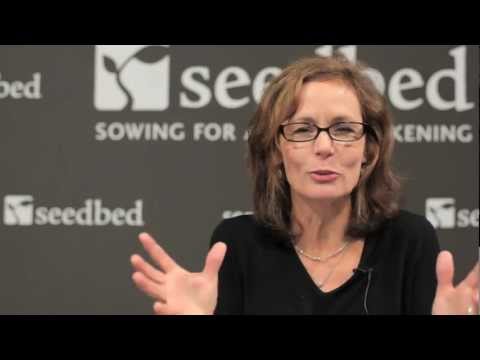
Dr. Sandra Richter is one of the rare teachers who can move someone to joyful tears while lecturing on the patrilocality of ancient near eastern culture. Her introduction to the Old Testament is one of the best books I've ever read. It's a book I can hold in one hand with my other hand raised in worship. That. Good. I can't speak highly enough about her which is why you want to watch the video below from the Seedbed's 7-Minute Seminary.
Quiet
This morning I read Zephaniah (one of those books near the middle with no fingerprints or underlines) and was grabbed by one part of a verse in the 3rd chapter:
3:17 The LORD your God is in your midst, a mighty one who will save; he will rejoice over you with gladness; he will quiet you by his love; he will exult over you with loud singing.
I looked up the Hebrew word for "quiet" in a lexicon and a theological dictionary and you know what I found? It means, "quiet." I was hoping for some hidden, obscure facet in this gem of a word but, as best as I can tell, it means what it says. Quiet. "He will quiet you by his love."
When I was a kid, if I did something wrong or got hurt doing something I shouldn't have been doing, I'd try to blubber out an explanation to my mom between deep gasps for breath. I notice my daughter does the same thing, like when she got stung by a wasp a couple of weeks ago. She wanted to tell me what she was doing as she sobbed and all I wanted to do was hold her close to me and love her (even though my wife was the one she ran to - my impulse was to hold her, rub her back, and say "Shhhh."). I didn't need an explanation. I needed to be her daddy.
In Luke 15, a son leaves home as badly as one could. He alienates everyone and wastes what his daddy gave him on trying to outdo Solomon in Ecclesiastes. He realizes his terrible, terrible choice and decides to go home. He prepares his speech but before he can get it all out his daddy starts throwing a homecoming party. I think of Rembrandt's painting and hear the father saying, "Shhhh," quieting the young man with his love.
I pray that we all experience this kind of loving forgiveness and that instead of preparing our explanations, excuses, or whatever it is occupying our minds that the love of God would quiet you and embrace you like you've never experienced before.
Francis Asbury Resources
I've added a new page to my site this evening. I'll be curating resources about Francis Asbury there. You can see the link on the left hand side of the page or go directly there with this link.
If you find things I've missed, please leave a comment and I'll update the page.
Scripture Memory
A couple of years ago, I started meeting every week with a guy who is on staff with the Navigators. We got to know each other and developed a friendship out of which we started the discipline of reviewing verses of the Bible that we were memorizing. My friend had been memorizing parts of the Bible longer than I've been alive and I was just getting started with the Topical Memory System. After about eighteen months I had memorized the sixty passages in that pack and have moved on to memorize other passages.
Psalm 119:9,11 says, "How can a young man keep his way pure? By guarding it according to your word. I have stored up your word in my heart that I might not sin against you." That was kind of the reason I started memorizing parts of the Bible. Also, you know, it's one of those things I thought I was supposed to do and, I felt a little guilty that I could quote Homer Simpson better than Jesus. So, I did it. At times I wondered why it was so important to me do something that did not come naturally to me at all. Was it misguided piety? Was it so I could rattle off verses and impress people? I really didn't have that kind of "look at me!" motivation, I just wanted to do it. I think it helped my preaching a bit, but I've never been able to figure out where the discipline fit into my life and ministry.
Until tonight.
Tonight, I was getting ready to leave the church when one of my guys had a buddy with him who wanted to talk about baptism. While talking about baptism the guy from my church turned to the other and said, "Are you saved?" I had assumed, wrongly, that if someone was asking about baptism that, well, they were already following Christ. The fellow said, "I don't really know." So, we immediately turned around and the three of us went into my office. I asked him if he even understood the question: what does "saved" mean? I wanted to start at the beginning and explain the human condition. Without thinking I started in sharing and explaining:
Romans 3:23 Romans 6:23 Romans 5:8 Romans 10:9 Romans 10:13 Ephesians 2:8,9 Romans 8:1 2 Corinthians 5:17 Luke 9:23
By the time I got into my truck to drive home I was thinking, "Whoa!" It was amazing to see how a simple discipline meant so much in explaining the love of God in Jesus Christ not with my own words but with God's Word. I carry no authority. It does.
And, because of storing up those words in my heart, one new guy knows the truth about God's love for him and is following Jesus.
Best. Evening. Ever.
More Please
I'm doing some extra-curricular reading at the momement that is meant to generate some ideas I can use for an upcoming Theology of Ministry paper (due in November). It is definitely stirring my mind, but like I experienced during my month away at Asbury, it's stirring my heart as well.
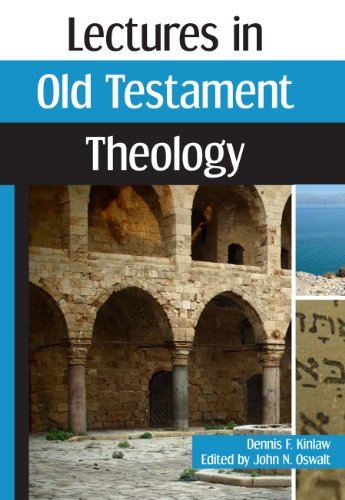
I joked yesterday in the sermon I preached that once I finished the two papers I turned in on Friday I wanted to read something not on a syllabus. So, I started reading a book on Old Testament Theology (I didn't get a single laugh out of that in two services. They must really think I'm a nerd!). The book, linked below, is Dennis Kinlaw's Lectures in Old Testament Theology. Dr. Kinlaw is a bit of a spiritual hero to me. I try to read Preaching in the Spiritonce a year, and I love listening to his sermons and lectures on my iPhone. He taught at Asbury University and Asbury Theological Seminary and so I knew that his book on OT Theology would be right up my alley.
I've only read the first chapter and already have been turned upside down a bit. The essence of that first chapter is that God wants to be known and we can either cooly observe God or we can really know God. Israel's purpose for the Bible wasn't to record things so that modern people could anaylze every jot and tittle and a sterile laboratory; they wrote it down so that future generations could know God. (This isn't to discount serious study of the language, literature, and theology of the Bible. It's the opposite: the more we know the more we can know who God is.)
In this presentation, Dr. Kinlaw shines even more light on something I was thinking while reading the introduction of Harald Linström's book Wesley & Sanctification. One scholar accuses Wesley of being merely an empiricist when it comes to theology, which is certainly a valid argument. Wesley was concerned with the experience of the Christian faith. However, as I read that paragraph in Lindström's book I kept thinking, "But Wesley wanted us to experience the God of the Bible that he studied vigorously - it was a melding of heart and mind. He wants us to know (mind) the God we are to love with all of our heart, soul, mind, and strength." Lindström made the same point a couple pages after I thought this, but it did not come alive for me until I read chapter 1 in Kinlaw's book. It's not gnosticism, it's intimacy.
Oh, that we might get more of this! Read more, study more, but do it to get more of God!
Reading
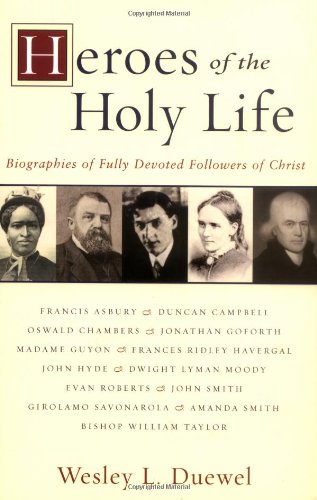
I'm finally done with two of the three papers assigned to me before I left Asbury last month. The other one is not due until November 7th and I am excited to get started on that one, but for now, for the weekend, I'm going to relax and read some of the other books I picked up while in Wilmore. I picked up several books from The Francis Asbury Society including the one I started today - Heroes of the Holy Life. This book contains several mini-biographies of Christians who were deeply concerned with holiness and filled with the Holy Spirit. It's been an inspiring read for the two hours I've had it open. I recommend it. There is a lot of good to be gleaned from Christian biographies and this one is a good starting place. Your heart might get so captivated by one of the people that you read a fuller treatment of their lives somewhere else.
Admitting Weakness
I've confessed over and over to friends, family, and church that my most besetting sin is my ruthless determination to protect my fragile ego. My friends in AA have taught that the first step to recovery is acceptance. From a recovering ego-maniac, Sam's admission helps shine light on the path.
Two Exerpts from Today's Reading.
The American Jesus is more a pawn than a king, pushed around in a complex game of cultural (and countercultural) chess, sacrificed here for this cause and there for another."
Stephen Prothero, American Jesus quoted in Stephen Seamands, Give Them Christ
And, sadly, Jeremiah 36:24 (NIV) "The king and all his attendants who heard all these words showed no fear, nor did they tear their clothes."
Both cause me to tremble.
Accepted
The cross proclaims that when you and I were at our worst, God loved us the most. We may have been rejected by others and tempted to despise ourselves, but we are infinitely loved by God. The cross settles the issue once and for all. No matter how others may define us or how me may be tempted to define ourselves, God has pronounced the final verdict: Accepted through his blood.
Wounds that Heal - Dr. Steve Seamands
My assumption coming into the DMin program was that none of it would impact my heart. I was completely and utterly wrong.
Community and Character
Somewhere I heard the quotation, "You can acquire anything in solitude except character." We need the whole community to test us, to refine us, to enable us to develop aspects of character including strength, kindness, and wisdom that we cannot gain without trials. We all need critics and rebukers, malcontents and misfits - even if (especially if?) these cause us pain - so that our feasting is virtuous and honorable.
Marva J. Dawn. The Sense of the Call: A Sabbath Way of Life for Those Who Serve God, the Church, and the World (p. 219). Kindle Edition.
Indeed. This is the danger for us who live too much in our own heads - we never get tested by the blessing of our community and end up stunting our own sanctification. Blessed is the one whose community is, in the name of our Triune God, building one another up in love (Hebrews 10:24-25).
Seek First
I'm not sure I've ever worked as hard academically as I have these last two and a half weeks. That's a confession, not a brag. It actually feels a bit natural to commit wholeheartedly to something I feel I'm good at.
I only mention that part of my time back at seminary to set up a huge contrast. Forasmuch as I have felt alive in the academic environment during the time I've been here, it is a pitiful tiny thing compared to the gracious work of God in my heart. God brought people, books, and ideas into my life since 29 July, but none of that compares to the Holy Spirit come to break me of my self-centered dependence.
This isn't to say that the work is complete or even that large work has been wrought. It is to say that for the first time in a long time God has drawn the attention of my heart to him in an inescapable way. I spent much time since I came to know Christ putting him off, saying "Wait till I'm ready to surrender every bit of me to your will." With that attitude, that day will not arrive until I stand before the Judge (Hebrews 9:27). Now my resistance is at an all time low and the deep attractiveness of God's holiness is pulling me toward him.
In one of the many evidences of God's great heart work since I've been here, Dr. Robert Coleman came to visit with our cohort yesterday. He has long been one of my heroes of the faith and a man deeply passionate for God because he was a man deeply changed by God at the kneeling rail in Hughes Auditorium across the street in 1950. I listened to him say some pretty moving and profound things yesterday, particularly about holiness, but the thing I keep coming back to is his recounting of the Asbury College revivals in 1950 and 1970. There were lots of questions about that. The underlying question was "How can this happen again in my church?" Dr. Coleman wisely counseled that we cannot create revival but we can be ready by our willingness to lay ourselves bare when it comes. He reminded us of Psalm 85:6 (ESV) "Will you not revive us again, that your people may rejoice in you?" to point out that the point of reviving us isn't to make much of us but so that God is the central focus of our whole lives. Our rejoicing isn't because we feel good about it but because God is so great and so magnificent that our hearts can't help but rejoice in him.
This is what I perceive right now. The attractiveness of God's holiness isn't about me but about him. My holiness isn't about doing things right but about being obsessed with God with my whole heart because God's greatest gift to us is himself. Why wouldn't I want as much of that gift as I could possibly get?
Nourishing Mother


When I left home last week, my lawn was a mess. A dry brown mess. It almost looks like the roots of the grass are coming out of the ground looking for water. It's a perfect picture of what my heart has looked like for a while. What my lawn needs is what my soul needs: water and reseeding. I'm getting both during my time back at Asbury Seminary.
One of the greatest gifts that I have received in the Beeson Program has been the opportunity to come back to Wilmore, KY. When I graduated from Asbury Theological Seminary in 2003, I didn't waste any time getting the moving van loaded up and down the road. I was ready to start a new phase in life and ministry and I didn't look back much at all. I came back for two Ministry Conferences (2004 and 2006) but I used those primarily as an opportunity to visit and spend time with my good friends, the Houks. I didn't really miss anything but the friends.
Something happened in the intervening years that has made this trip very different. I've found myself in need of water for my parched soul. Not the clean, pure water I prefer to drink out of bottles but flowing rivers of living water from the one who gives when we ask. I've been looking to myself for so much: needs, wants, success, spiritual depth and a bunch of stuff I can't even list. I've completely deluded myself into believing that I can provide what only Jesus can give. The woman at the well in John 4 tells Jesus he doesn't have anything to get the water out of the well; it's like she's saying "Jesus, you don't have the tools to give me what I need." How often I have treated Jesus like he doesn't have the tools or the ability to give me what I need. Here in Wilmore, I'm constantly reminded of the sufficiency of Jesus and those reminders are stripping me of my self-reliance. It's hard. It's painful. But thank God who waters and refreshes his people!
Not only do I need the living water Jesus talked about, I'm also in need of reseeding. I've been told that later in the fall, when we get more rain (please, God!) it will be a good time to plant seed that will help regrow the grass in our yard. Dry, hard ground destroys growth and once the rain comes it's important to seed and fertilize for good growth. For the fruit of the ministry to grow, I need to reconnect with Jesus, the Bible, and the rich depth of Wesleyan theology and praxis. The books, conversations, prayer, worship, and even the walks have been scattering these seeds within me (speaking of seeds and reseeding, have you checked out the Seedbed?).
To stretch the metaphor a bit further, for a lawn to be really healthy you've got to get rid of the weeds. I've also had a time here of reflecting on the reading and the lectures that have exposed some weeds in my spiritual life and my vocation as a pastor. I'm not usually fond of that kind of self-reflection, but if I'm going to be the Christian and pastor I know God desires me to be, I've got to pull those weeds by God's power and his grace. I praise God that he has not only brought me here but also that he has matured me to a place where I can deal with those weeds. It's humbling but deeply grace-filled.
I'm amazed at how this has come together in such a short period of time. There is an intensity of spirit here among our group and in this community that has been exactly what I need. I don't think I ever realized how badly my heart was in need of repair until I stepped onto campus this time. I've been to a few different schools in my lifetime, but Asbury is truly my alma mater.